
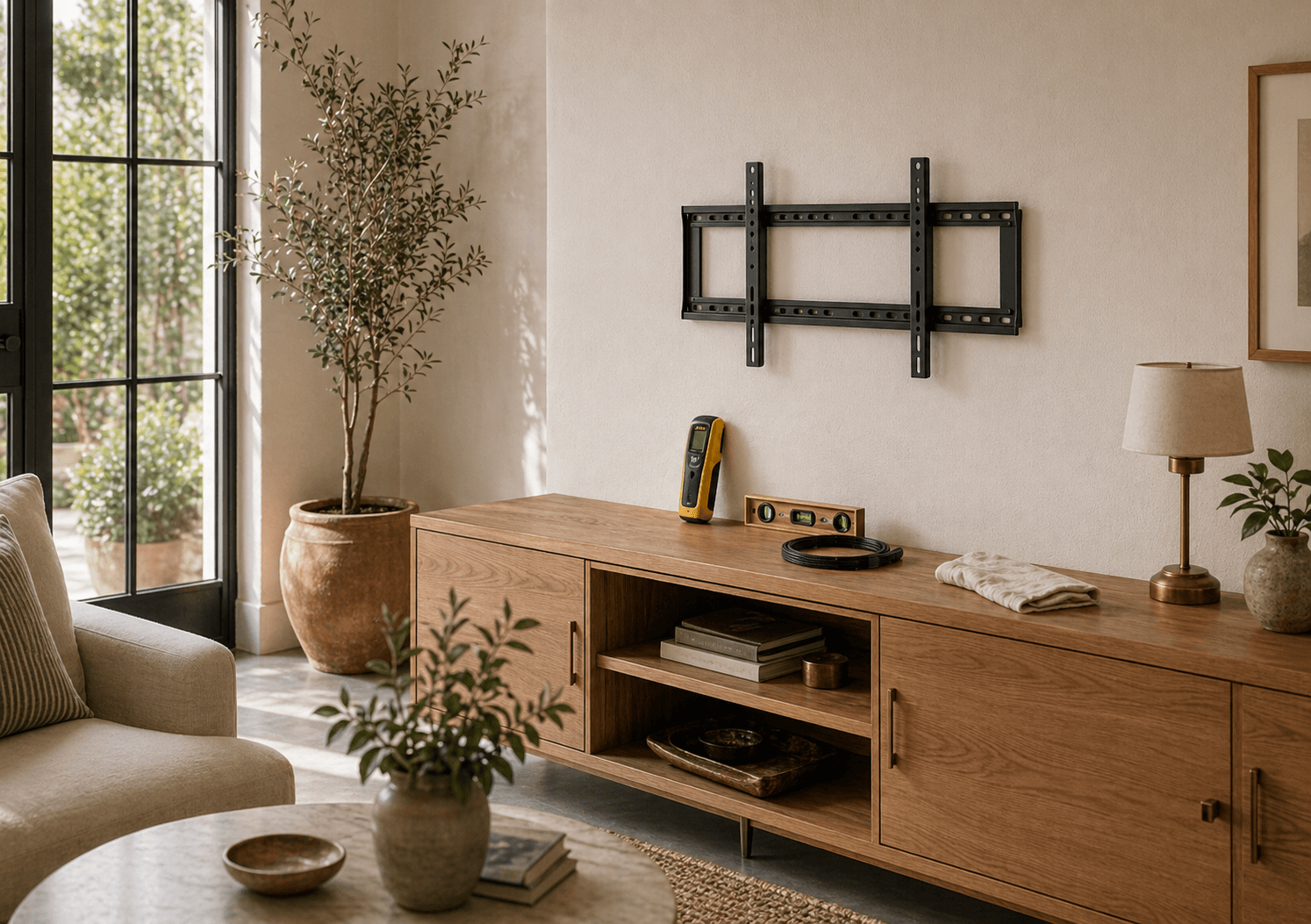
A plaster wall may be plaster over wood lath, gypsum lath, masonry, or another assembly. The surface alone does not identify reliable attachment points or what may be hidden behind it. A responsible mounting plan begins with compatibility, wall investigation, placement, and cable decisions—not a generic anchor selected from the hardware aisle.
Match the television and mount first
- Television manufacturer, complete model number, width, height, and weight
- VESA mounting pattern listed in the television specifications
- Mount manufacturer, model, supported VESA patterns, and weight rating
- Fixed, tilting, or full-motion design and the clearance needed for movement
- All manufacturer-supplied rails, spacers, screws, washers, and safety hardware
A full-motion mount places different leverage on the attachment than a fixed mount because the screen can extend away from the wall. Weight ratings do not override wall and fastener requirements. Follow both the television and mount instructions and do not combine unapproved hardware simply because the threads appear to fit.
Treat the wall as an investigation
Share photos of the full wall, nearby outlets, trim, the opposite side when accessible, and any known repair or construction history. Stud-finding methods can behave differently around plaster and lath, and exploratory drilling can chip or separate a brittle finish. Masonry, tile, fireplaces, picture rails, and unknown backing each change the plan.
Choose viewing position before attachment points
Mark the preferred screen center with removable tape, then evaluate seated eye level, room depth, glare, furniture, speakers, doors, and mount movement. The exact location may need to shift to reach appropriate support. A clean visual center is not useful if it conflicts with safe attachment, an outlet, a concealed utility, or the mount’s operating clearance.
Decide what cable concealment really means
External raceway can provide a tidy, accessible cable path without opening the wall. In-wall routing introduces questions about power, low-voltage cable ratings, fire blocking, insulation, access, and local requirements. The Electrical Safety Foundation International warns against running extension cords through walls or ceilings because they may overheat. Do not treat a standard television power cord as in-wall wiring; separate mounting from any approved in-wall power or specialty wiring scope during review.
Account for older painted surfaces
If drilling or repair will disturb paint in a pre-1978 home, review EPA lead-safe renovation guidance before work begins. The age of the finish matters even when the opening seems small. Share the construction year and any lead test information during scope review rather than after dust has been created.
Think beyond the bracket
The U.S. Consumer Product Safety Commission’s Anchor It campaign recommends mounting flat-screen televisions to help prevent tip-over injuries and following manufacturer instructions. Nearby furniture should also be stable and anchored where appropriate, especially in spaces used by children. After installation, retain the mount manual and hardware information so future screen changes are not based on guesswork.
When the wall, screen, mount, and cable plan are documented, review the TV mounting service page to see the common request details and submit the scope for review.