
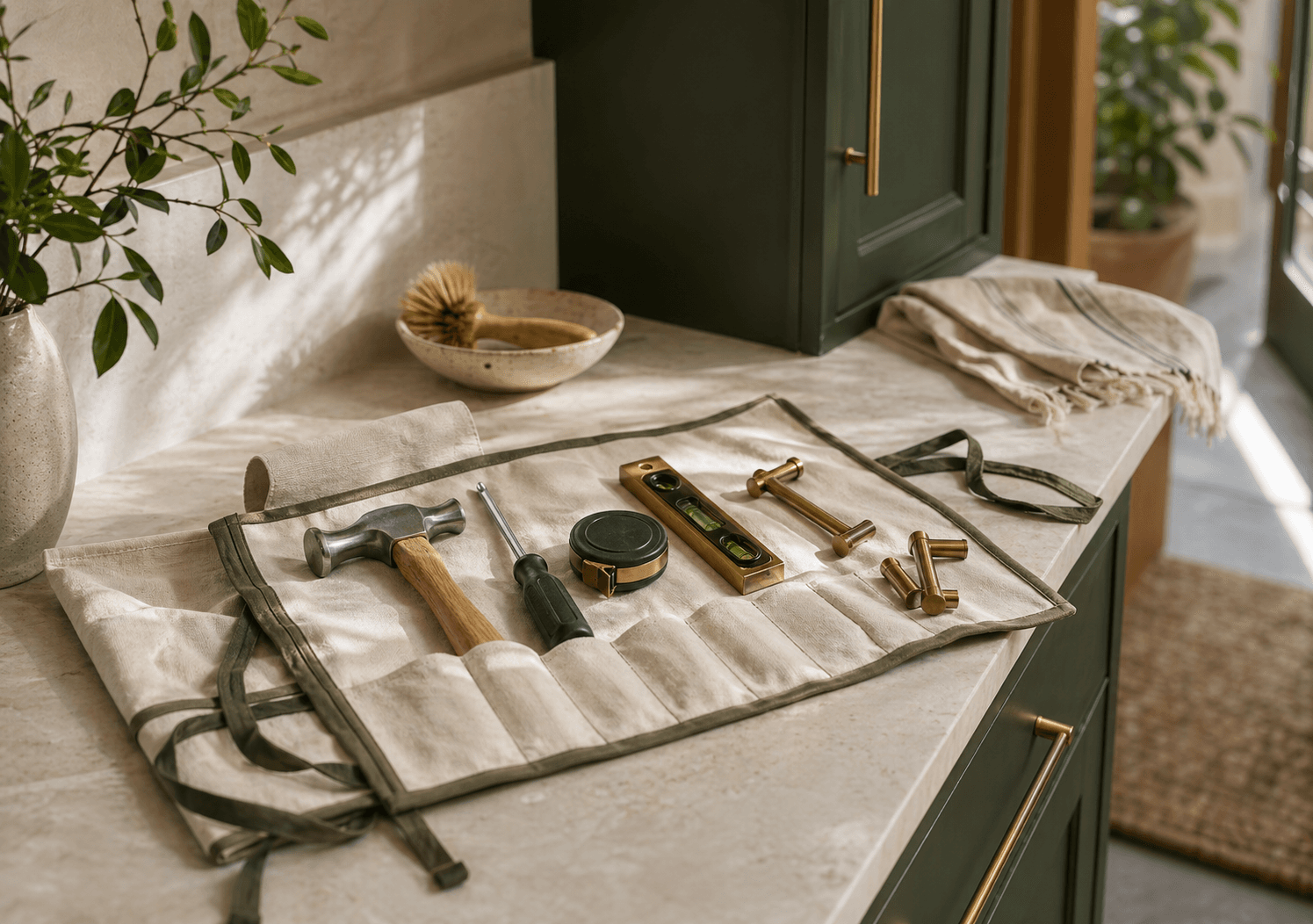
A strong home repair punch list does two jobs: it helps you decide what matters most, and it gives the person reviewing the work enough information to recommend a realistic next step. You do not need technical vocabulary or a diagnosis. You need a clear description of what you can see, where it is, how it behaves, and what outcome you want.
Start room by room
Walk the home in a consistent order instead of trying to remember jobs by trade. Begin outside, then move through the entry, living areas, kitchen, bedrooms, bathrooms, utility spaces, and garage. Record one issue per line. “Upstairs bedroom door rubs at the top and will not latch” is more useful than “fix doors” because it identifies the location, symptom, and desired result without guessing at the cause.
- Location: room, wall, door, cabinet, appliance, or exterior area
- Visible condition: loose, cracked, rubbing, dented, stained, missing, or not operating
- Desired outcome: secure, close smoothly, patch for paint, install, align, or assess
- Timing context: routine upkeep, move-in, photography, inspection, or an active concern
- Responsibility: homeowner, renter with authorization, agent, or property manager
Add two photos and one useful measurement
For each item, take one wide photo showing the surrounding area and one close photo showing the hardware, damage, label, or attachment point. Include a ruler or tape measure when size affects materials. Product labels, model numbers, mounting instructions, and photos of the parts already on site can prevent an unnecessary round of questions.
Prioritize by consequence, then convenience
Put active water, loss of secure closure, exposed damage, and other safety-related concerns at the top and avoid using or forcing anything that appears unsafe. After that, rank the items that block daily use or a real deadline. Cosmetic details can follow. A priority order does not guarantee that every item belongs in one visit, but it gives the reviewer a sensible way to organize the request.
Separate small repair work from specialist questions
Some items may involve permits, regulated electrical or plumbing systems, structural movement, hazardous materials, glass, roofing, gas, or another specialty. Do not remove those concerns from the list. Flag them clearly so they can be routed instead of being forced into an unsuitable handyman scope. The City of Long Beach permit overview and California Contractors State License Board guidance explain why project type, permit requirements, labor, and total value can affect the appropriate provider.
Use a repeatable entry format
- Where: Hall bathroom, left wall beside the vanity.
- What I see: Towel bar is loose at one bracket; drywall surface is slightly crushed.
- What I want: Secure the bar or recommend a better mounting location.
- What I have: Original bar and screws; no replacement anchors.
- Useful context: Wall is standard painted drywall; no known plumbing at this location.
- Priority: Medium—usable, but getting looser.
Once the list is organized, submit the highest-priority items with photos rather than waiting for it to become perfect. Paloma Pro can review the request, identify missing information, and confirm which service path is appropriate before a preferred appointment window becomes final.